Floor Tiling Singapore
Floor and wall tiling laid with precision levelling — large-format, marble-look, porcelain and homogeneous tiles. Clean joints, flat floors, protected site.
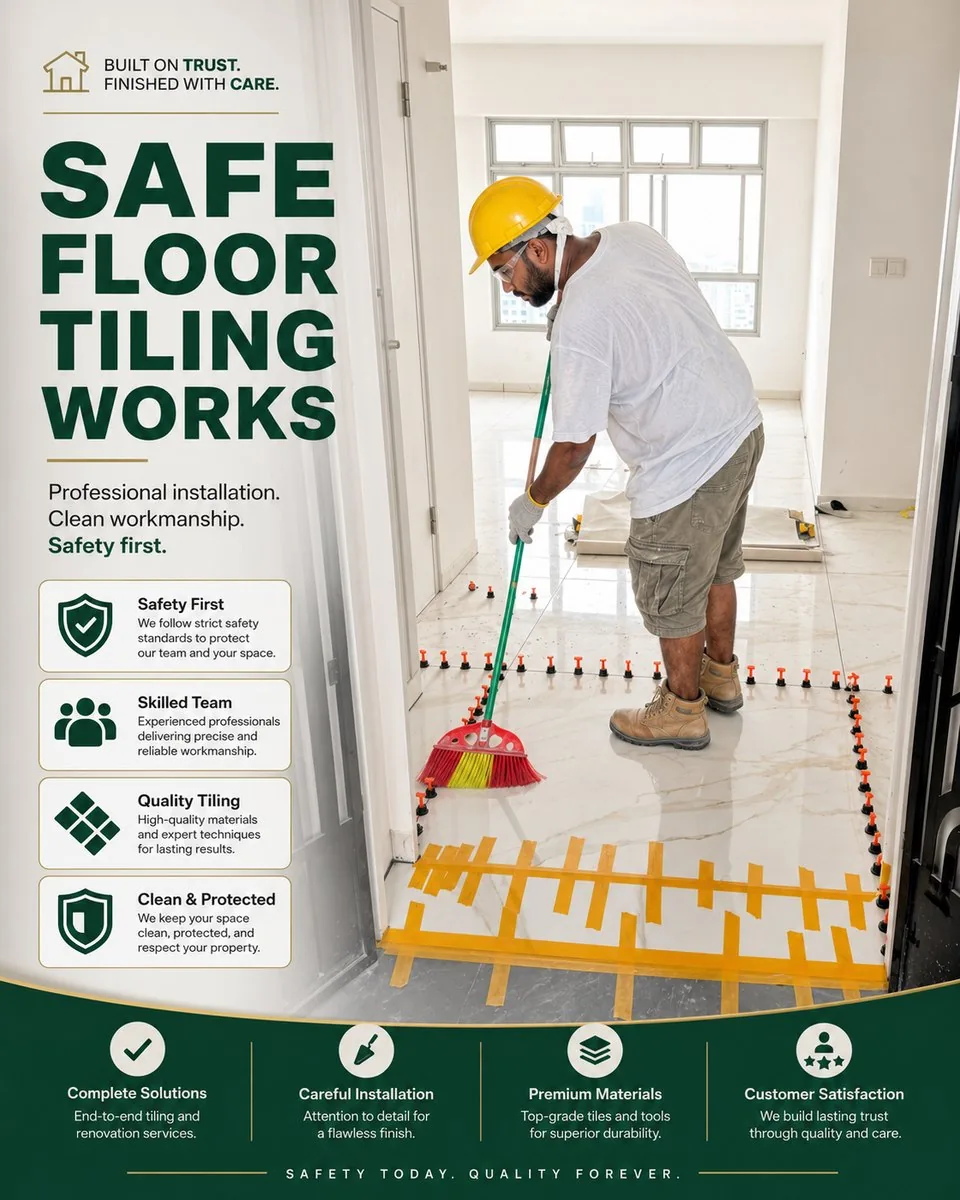
Tiling Works Singapore — Flat Floors, Clean Joints, No Hollow Tiles
Tiling looks simple until it goes wrong. Hollow-sounding tiles, lippage between edges, uneven grout lines and cracked corners are all the result of rushed preparation — not bad tiles.
We use tile levelling systems on every job and take the time to prepare the substrate properly. It costs a little more in labour and saves a full re-lay two years later.
Tiling Works We Carry Out
| Service | Details |
|---|---|
| Floor Tiling | Living areas, bedrooms, kitchens, balconies, commercial floors |
| Wall Tiling | Bathrooms, kitchen backsplashes, feature walls, shop interiors |
| Tile Hacking | Removal of existing tiles and screed, full debris disposal |
| Screed & Levelling | Substrate preparation and self-levelling compound where required |
| Waterproofing | Membrane systems for bathrooms, balconies and service yards before tiling |
| Skirting & Trims | Tile skirting, aluminium and stainless trims, corner beading |
| Grouting & Sealing | Epoxy or cement grout, sealing for porous surfaces |
| Repair Works | Replacing cracked, hollow or lifted tiles |
What Affects Floor Tiling Cost
Tiling is usually quoted as a labour rate per square foot, with tiles supplied separately. What changes that rate:
| Cost Driver | Why It Matters |
|---|---|
| Tile format | Large-format tiles (600×1200mm and up) are heavier, need two installers and demand a flatter substrate |
| Hacking required | Removing existing tiles and screed is a separate scope from laying new ones |
| Substrate condition | An uneven floor needs levelling compound before any tile goes down |
| Waterproofing | Wet areas need a membrane system installed and tested before tiling |
| Layout complexity | Diagonal, herringbone and patterned layouts take longer and waste more material |
| Cuts and edges | Many corners, niches and pipe penetrations mean more careful cutting |
| Grout type | Epoxy grout costs more than cement grout but resists staining far better |
| Skirting and trims | Tile skirting, aluminium and stainless trims are priced by running length |
Choosing the Right Tile
Homogeneous Tiles
Colour runs through the full thickness, so chips are far less visible. The most durable option and the usual choice for high-traffic floors.
Porcelain Tiles
Dense, low water absorption, and available in convincing marble and stone effects. Excellent for wet areas and the most popular choice for Singapore living rooms.
Ceramic Tiles
More affordable and lighter, best suited to walls rather than heavily used floors.
Large-Format Tiles
600×1200mm and larger create fewer grout lines and a more seamless look. They demand a very flat substrate — on an uneven floor, large tiles expose every dip. Levelling systems and extra preparation time are essential.
Waterproofing Comes First
In any wet area — bathroom, service yard, balcony — the waterproofing membrane is what actually stops water, not the tiles. Tiles and grout are porous.
Retiling a bathroom without replacing failed waterproofing is the single most common shortcut in Singapore renovation, and it reliably produces a leak into the unit below within a year or two. We always replace the membrane during a bathroom retile and test before tiling starts.
Site Protection
Tiling is dusty, wet work. On every job we lay floor protection on completed areas, seal off rooms not being worked on, remove debris daily rather than stockpiling it, and hand over the space cleaned rather than swept.
How Long Tiling Takes
- Single bathroom (hack, waterproof, retile) — 5 to 8 days
- Kitchen floor and backsplash — 3 to 5 days
- Whole 4-room HDB floor — 8 to 14 days including hacking
- Commercial floor, 1,000 sq ft — 6 to 10 days
Tiles need curing time before heavy use. We'll tell you exactly when the floor is ready to walk on and when furniture can go back.

Tiling FAQ
What does floor tiling cost depend on?
Tiling is normally quoted as a labour rate per square foot with tiles supplied separately. Large-format tiles cost more to lay because they are heavier and need a flatter substrate. Hacking, levelling, waterproofing and complex layouts such as herringbone are each priced as separate scopes.
Do I need to hack old tiles before laying new ones?
In most cases yes, particularly in bathrooms where waterproofing must be replaced. Overlaying is occasionally possible on sound floors, but it raises floor height and can exceed HDB screed thickness limits.
What is the best tile for Singapore homes?
Homogeneous and porcelain tiles are the most popular for floors because they are dense, durable and handle humidity well. Ceramic is more affordable but better suited to walls than high-traffic floors.
Why do tiles sound hollow when tapped?
Hollow sounds mean incomplete adhesive coverage under the tile, usually from rushed installation or poor substrate preparation. Those tiles are far more likely to crack or lift later, which is why full adhesive coverage and levelling systems matter.
Do I need waterproofing before tiling a bathroom?
Yes. Tiles and grout are porous, so the waterproofing membrane underneath is what actually stops water. Retiling over failed waterproofing is a common shortcut that typically causes leaks to the unit below within a year or two.
How long before I can walk on new floor tiles?
Light foot traffic is usually fine after 24 to 48 hours, but furniture and heavy use should wait until grouting is complete and cured, generally 3 to 5 days. We'll confirm timings for your specific job.
Can you lay tiles I have bought myself?
Yes. We're happy to lay client-supplied tiles, or supply them at trade prices. If supplying your own, order around 10% extra for cuts, wastage and future repairs — discontinued ranges are very hard to match years later.
Other Renovation Services
Get a Free Site Visit & Itemised Quote
We measure on site, then send a fully itemised quotation within 3 working days. No obligation, no hidden charges.